
Diagnosis, Disclosure and Support for Neurodivergent Employees
The Confidence to Act: Research Summary
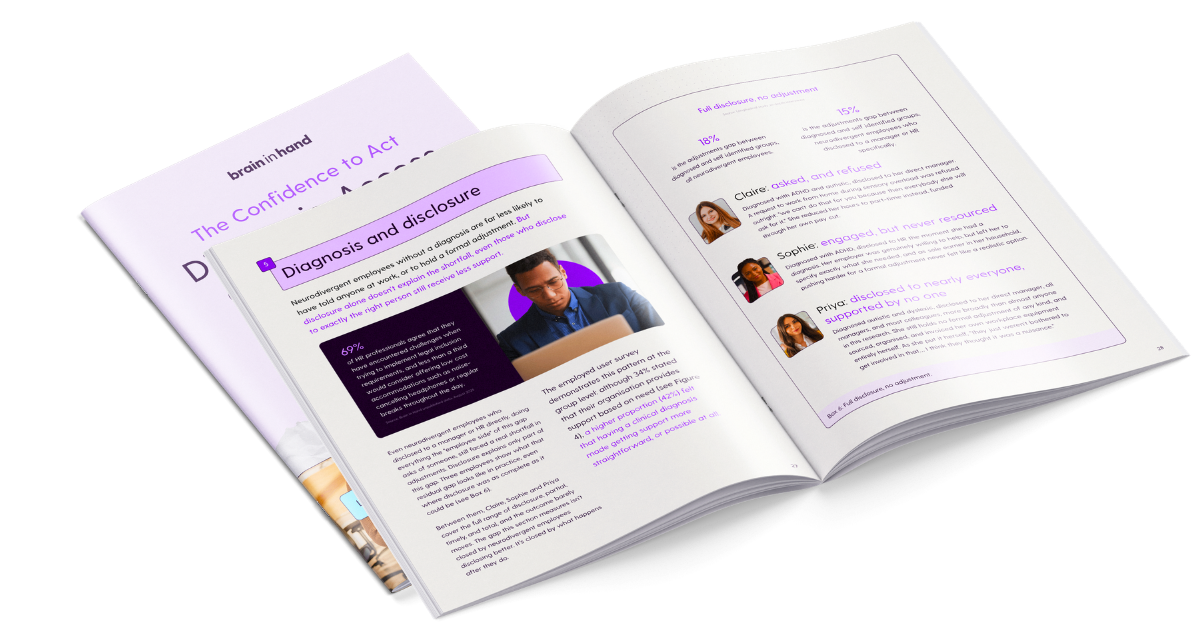
This two-page summary draws out the key findings from our full report, The Confidence to Act.
This research is focused on how diagnosis and disclosure are linked to the support that employees receive, and how diagnosed and undiagnosed groups benefit from support.

Who it's for
Chief Human Resource Officers, HR Directors, Employee Benefits leads, DEI professionals and Wellbeing leaders who want a concise, evidence-based overview of the research and its implications for their organisation.
What you'll take from it
-
The diagnosis wait is holding support back
Why most organisations are waiting for a diagnosis before offering support, and the evidence that shows how waiting becomes a barrier.
-
Same need, different starting point
Data showing that diagnosed and self-identified employees arrive at work with the same level of need across every clinical measure of wellbeing, anxiety, stress and fatigue.
-
Support works, whoever it's for
Evidence that both groups benefit equally from support once they receive it, including improvements in self-assessed work performance.
-
Five steps to a diagnosis-agnostic approach
Actions organisations can take to move toward a diagnosis-agnostic approach to neurodivergent support.